
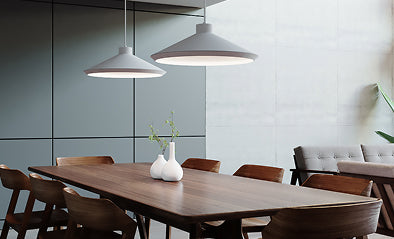
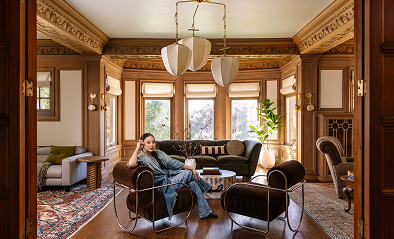


Lighting can make a huge difference in how a space looks and feels. The right fixture can provide the lighting that you need while also becoming a key part of the room's overall design. Two of the most popular decorative lighting options are pendant lights and chandeliers.
While some people may use the terms interchangeably, pendant lights and chandeliers are not the same. The main difference between the two is that a pendant light fixture hangs by a rod or cord with a single light source, while a chandelier has multiple branches or arms supporting several light sources. If you're deciding between these two popular lighting fixtures, understanding the difference can make it easier to choose a lighting fixture that suits your space, lighting needs, and style.
What Is a Pendant Light?

A pendant light is a hanging lighting fixture that hangs and uses a single suspension system such as a chain, cord or metal rod. The single hanging light has some type of shade or decorative fixture surrounding the bulb to provide direct light.
Pendant lighting fixtures are available in a wide range of shapes, sizes, materials, and finishes. Some have a simple, minimalist appearance, while others are more decorative and can serve as a design focal point.
Common Uses for Pendant Lighting Fixtures
Pendant lights are most commonly used above areas where focused lighting is useful. They are often installed above:
-
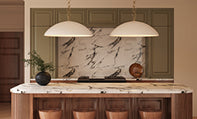
Kitchen islands
-
Dining tables
-
Breakfast bars
-
Kitchen counters
-
Entryways
-
Bedside tables
-
Bathroom vanities
-
Reading areas
One of the biggest advantages of pendant lights is their versatility and directed illumination. One pendant can work well in a smaller space, while several lights can be installed as a group to create a more dramatic look.
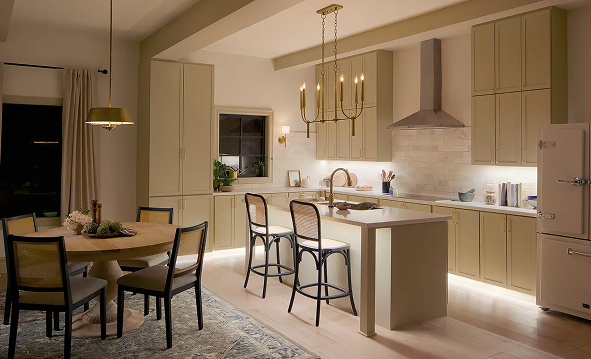
As an example, three smaller pendant lights can be arranged above a kitchen island to provide balanced illumination while also creating visual interest. In a dining room, one larger pendant can provide a defined lighting source above the table without overwhelming the rest of the space.
Characteristics of Pendant Lights
Pendant lights are characterized by their suspended design and relatively focused light source. Depending on the shade and bulb, they can provide direct, downward lighting or softer, more diffused light.
They are also highly versatile. Pendant fixtures can feature glass, metal, fabric, wood, ceramic, or other materials, meaning there is a pendant light to suit virtually any interior design style.
Because they are generally smaller and more streamlined than traditional chandeliers, pendant lights can be a practical choice when you want decorative lighting without making it the dominant feature of the entire room.
What Is a Chandelier?
A chandelier is a decorative light fixture that features multiple light bulbs arranged around a central structure. Traditionally associated with elaborate designs, modern chandeliers now come in a wide variety of styles, from traditional crystal chandeliers to simple and contemporary fixtures.
Unlike a pendant light, which has one main light source or shade, a chandelier is designed around multiple bulbs, branches, arms, tiers, or other decorative elements.
Common Uses for Chandeliers
Chandeliers are often used in rooms where lighting is intended to make a statement. Common locations include:
-
Formal dining rooms
-
Entryways and foyers
-
Living rooms
-
Above staircases
-
Master suite bedrooms
-
Large kitchens
-
Open-concept or grand spaces
A chandelier can act as both a source of lighting and a bold design statement. In an entryway, a large chandelier can set the tone of the design of the home as soon as someone walks through the door. Chandeliers centered over a dining table can help define the dining area while providing lighting for meals and entertaining.
Characteristics of Chandeliers
The defining characteristic of a chandelier is its multiple arms arranged as part of a single decorative fixture. Chandeliers can have as few as two or three lights or dozens of individual bulbs, depending on their design and size.
Chandeliers provide a more visually substantial look than pendant lights. However, this doesn't necessarily mean that every chandelier is large or traditional. Contemporary chandeliers can be minimalistic, featuring geometric shapes, clean lines, and a small number of light sources.
The key distinction is the fixture's overall construction and arrangement rather than simply its size or style.
Pendant Light vs Chandelier: What Are the Key Differences?
The main difference between a pendant light and a chandelier is the way the fixture is structured and how the light sources are arranged.
A pendant light hangs from the ceiling as a single fixture and is often designed around one primary light source. A chandelier has multiple light sources arranged together on a central frame.
However, the difference isn't always obvious. Some large pendant lights can look similar to chandeliers, while modern chandeliers can have very streamlined designs with sleek lines that resemble oversized pendants.
Pendant Light:
-
Light sources: One main light source.
-
Design: Often simple, streamlined, and versatile.
-
Size: Generally smaller, making it suitable for compact spaces.
-
Light direction: Often provides focused or downward lighting.
-
Typical use: Ideal for task lighting and smaller spaces.
-
Common locations: Kitchen islands, counters, bedrooms, and entryways.
-
Installation: Suspended from the ceiling at a single point.
-
Visual impact: Can be subtle or decorative, depending on the design.
Chandelier:
-
Light sources: Multiple light sources.
-
Design: Often more elaborate or visually substantial, serving as a decorative centerpiece.
-
Size: Generally larger, although modern designs can be compact.
-
Light direction: Can provide broader, multi-directional illumination.
-
Typical use: Well suited for soft and diffused lighting and statement-making.
-
Common locations: Dining rooms, foyers, living rooms, and larger spaces.
-
Installation: Suspended from one central mounting point.
-
Visual impact: Often serves as a decorative focal point in the room.
The key differences between the two types of fixtures come down to more than appearance. A pendant is a suspended light designed around a more concentrated fixture, while a chandelier is typically a multi-light fixture designed to illuminate and visually anchor a space for decorative purposes.
Pendant Light vs Chandelier: Which One Is Better?
There isn't one option that is universally better. The right choice depends on the location, the amount of light you need, the room size, and the overall lighting design style.
Choose a Pendant Light If...
A pendant light may be the better option if you want:
-
Accent lighting over a specific area
-
A clean and relatively simple design
-
A fixture for a kitchen island or breakfast bar
-
Multiple lights arranged over a long surface
-
A smaller fixture for a compact room
-
Greater flexibility in placement and arrangement
Pendant lights are particularly effective when you want to combine function and style without having a large fixture dominate the room.
Choose a Chandelier If...
A chandelier may be the better choice if you want:
-
A statement lighting fixture
-
Multiple light sources
-
A strong focal point
-
A larger visual impact
-
A fixture for a dining room, foyer or formal spaces
-
Lighting that helps define a large or open space
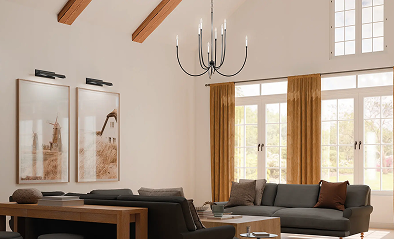
A chandelier can be an especially good choice in rooms with higher ceilings or larger proportions, where a single pendant light could feel visually lost.
That said, modern chandeliers can work beautifully in smaller rooms too. The important thing is choosing a fixture that is appropriately scaled to the space.
Seven Things to Consider Before Choosing
Before choosing between a pendant light and a chandelier, consider more than just which fixture you like the look of. Several factors can affect how well the lighting works in your space.
-
Size
The size of the fixture should relate to the overall size of the room and the area where it will be installed.
A fixture that is too small may look out of place or fail to provide enough light. On the other hand, a fixture that is too large can overwhelm the room and make it feel cramped.
Consider both the fixture's width and height, especially in cases where it will hang over a dining table, kitchen island, or front door walkway.
-
Lighting Needs
Think about what you need the fixture to accomplish to ensure you have adequate lighting.
If you need focused light over a kitchen island or work surface, a pendant may be ideal. If you're trying to provide broader ambient lighting in a dining room or foyer, a chandelier may be more suitable.
The number of bulbs, bulb brightness, shade material, and direction of the light can all affect the fixture's performance.
-
Ceiling Height
Your ceiling height should play a major role in your decision.
A ceiling light fixture that hangs too low can interfere with movement and become impractical, while one that hangs too high may not provide the desired visual effect.
Chandeliers with multiple tiers or substantial decorative elements will require more vertical space. Pendant lights may offer greater flexibility in rooms with lower ceilings.
-
Room Proportions
Look at the room as a whole when choosing your light fixture.
A large chandelier may work well in a spacious entryway but feel overwhelming in a compact dining area. A small pendant may be perfect above a bedside table but look undersized in a large open-concept living room.
The fixture should feel proportionate to the surrounding space including the furniture, walls, and architectural features.
-
Style
Your lighting should work with the overall design theme of the room.
Pendant lights and chandeliers are both available in styles ranging from traditional and transitional to modern, industrial, minimalist, and contemporary.
Consider the finishes and materials of the space. The right lighting fixture can reinforce the existing design style rather than competing with it.
-
Number of Fixtures
You don't necessarily have to choose between one pendant and one chandelier.
Multiple pendant lights can be installed in a row over a kitchen island or long dining table when you need more light. Alternatively, one large chandelier can be used as a central focal point.
Think about your intended use and how many fixtures will provide the right balance of light and visual interest.
Design tip: Installing fixtures in odd numbers is more visually appealing.
-
Maintenance and Practicality
It’s important not to forget the consideration of how easy the fixture will be to clean and maintain.
Intricate wrought iron chandeliers with numerous decorative elements can require more cleaning than a simple pendant. Whether you choose incandescent light bulbs or energy efficient led lights, bulb replacement should also be considered, particularly for fixtures installed on high ceilings.
A beautiful fixture is important, but it should also be practical for the space and your lifestyle.
Choosing the Right Lighting for Your Space
When comparing a pendant light to a chandelier, making the best choice comes down to the space and what you want your lighting to accomplish.
Pendant lights offer a more focused, flexible approach to lighting and work well over kitchen islands, counters, tables, and smaller areas. Chandeliers are often a better choice when you want multiple light sources and a fixture that makes a stronger visual statement.
The key is choosing a fixture that is appropriately sized to provide the right amount of lighting, while working with the proportions of the room and complementing your overall design.
Whether you choose a single bulb pendant, a group of pendants, or a statement chandelier with a single light source, the right lighting can bring together the practical and decorative elements of a room.
Shop Pendant Lights and Chandeliers in Every Style at Lights Canada
Whether a pendant lights or chandeliers is the right choice for your space, find the perfect fixture in our collection of lighting. Shop a wide variety of sizes and styles, from sleek modern designs to classic statement pieces, and discover top picks from the lighting world to complements your home.
